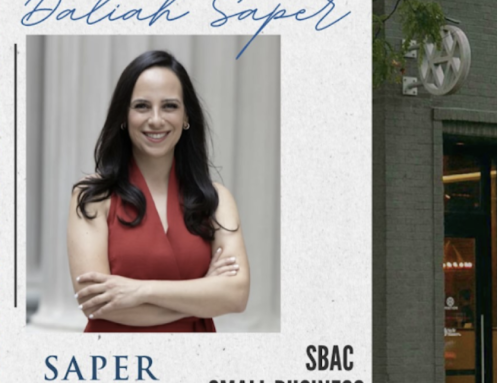
Mandarin Quarterly publishes Daliah Saper’s Article: 5 Trademarking Pitfalls
Five Trademarking Pitfalls


In XiYouJi, Sun Wukong launches his famous Havoc in Heaven with a simple act of rebranding. After a humiliating gig as stablegroom, the Handsome Monkey King adopts the title “QiTianDaSheng,” a catchy, distinctive name that perfectly reflects his idea of his own position in the marketplace. He’s so pleased with his innovative marketing efforts that he’s willing to fight both gods and demons to protect his brand.
Like Sun Wukong, business owners know that their name can be one of their most valuable assets, and selecting a name is one of the first important decisions entrepreneurs have to make. Unfortunately, many companies fail to consider the implications of trademark law on their choice of brand.
Trademarks are words or symbols that help consumers identify who makes a product. Trademarks can be strong or weak. The owner of a strong trademark can prevent anyone from using any name that’s even a little bit similar to theirs and can protect the name in connection with a broad variety of related goods and services. The owner of a weak trademark may only be able to prevent competitors from attaching an identical name to an identical product.
Having a weak trademark can allow competitors to free-ride on your company’s goodwill and hinder your efforts to build brand awareness. Here are a few of the most common mistakes companies make when selecting their name:
1) Picking a name that just describes your product
U.S. trademark law does not allow you to protect words that merely describe what your product is or what your product does. If you’re selling noodles, don’t call your product “Noodles.” If you design mobile apps, don’t call yourself Mobile App Design.
Trademark lawyers often argue about whether a name is too descriptive to be a trademark. For example, although “Energizer” is a well-known brand of battery, it is arguably merely a description of what a battery does (providing energy). Choosing a name that has no apparent connection to your product—for example, calling your computer company “Apple”—minimizes the room for argument and strengthens the protectability of your brand.
Choosing a descriptive name is understandably tempting for businesses. Companies naturally want a name that tells consumers exactly what they do. However, the more descriptive a name is, the harder it is to protect. It’s worthwhile exercising a little imagination before you call your delicious seafood restaurant “Delicious Seafood Restaurant.”
2) Picking a name that someone else is already using
Under U.S. trademark law, trademark rights go to the first person to use the trademark. Therefore, before falling in love with a particular name for your product, try to find out if anyone else is using the same name (or, better yet, hire an attorney to do a search for you). The United States Patent and Trademark Office (USPTO) keeps a database of trademarks that have been officially registered for use on a nationwide basis. In addition, a simple Internet search may give you a rough idea of who else is using similar names.
At worst, choosing a name that someone is already using could lead to a trademark infringement lawsuit. At the very least, it could prevent you from developing a unique and distinctive brand.
3) Not using your trademark
Again, trademark rights are based on use. A trademark is only protectable if it is attached to goods or services that you are actually selling. Some companies think that pasting their logo on a website next to a TM symbol is enough to protect it. It’s not.
The more you use your trademark and the better known it becomes, the stronger it is.
4) Not using your trademark consistently
Using multiple variations of your trademark or using multiple trademarks on a single product weakens the strength of those trademarks.
If a product is known by many different names, this hampers consumers’ abilities to form strong associations between a trademark and a product. Similarly, although a trademark owner can prevent others from using variations of their trademark to some extent, it is important to use a consistent version of your trademark: consistent spelling, consistent appearance, consistent color.
5) Not registering your trademark
You don’t have to register your trademark to begin acquiring trademark rights, but until you file a trademark application with the USPTO, your rights may be limited. Without registration, you may only be able to protect your trademark within the specific geographic region where you’re operating. In addition, if you do find that someone else is using your trademark without your permission, you may have a difficult time proving that you were the first to use the trademark, and you may have fewer options for enforcing your rights.
Registration with the USPTO gives you trademark protection throughout the United States and makes it easier to pursue legal action if you find that someone is attempting to copy your brand.
The QiTianDaSheng had to battle the gods to establish a strong trademark. By avoiding the common mistakes above, you may be able to protect your brand without resorting to violence.